Let's Get Started Barbecue'n
America's Absolute Favorite Pastime
Welcome to Barbecue's Home Page on the Internet.
We have collected literally everything you wanted to know, and more!
You will find more information than you thought ever existed on
'The Art Of Smoking, Cooking And Grilling'
We'll first begin by trying to explain what barbecue really is. This is a difficult task in as much as there are about a thousand different definitions that we have been brought up with.
Webster's Collegiate Dictionary
barbecue
1 : to roast or broil on a rack over hot coals or on a revolving spit before or over a source of heat;
2 : to cook in a highly seasoned vinegar sauce.
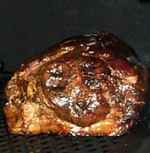 Barbecuing is more than
spending a couple of hours on Saturday afternoon, cooking a few ribs
and chicken over a 600-degree flame, burning barbecue sauce that has been
smeared over the meat much too early. The present or future Pitmaster will find some
of the finest resources available to create absolute masterpieces of
'the flame'. Our primary focus centers around barbecuing and grilling over a wood fire with additional information about gas grills. Barbecuing is more than
spending a couple of hours on Saturday afternoon, cooking a few ribs
and chicken over a 600-degree flame, burning barbecue sauce that has been
smeared over the meat much too early. The present or future Pitmaster will find some
of the finest resources available to create absolute masterpieces of
'the flame'. Our primary focus centers around barbecuing and grilling over a wood fire with additional information about gas grills.
A Brief History of Barbecuing
Theory #1
The true beginning to the Art Of Barbecuing is as obscure as attempting to identify a piece of meat after a thorough grilling by the novice. Rumor has it that the French may have begun the process of Barbe-a-quene which means cooking from the beard to the tail. The meat was always covered with a fancy sauce, thus creating the "French Touch".
Theory #2
Others believe the beginnings occurred with the Caribbean Arawak Indians who, in their generosity, taught the Spanish sailors the Art Of Barbecuing. They placed the meat on green wooden sticks over an outdoor fire. They called it Barbacoa,
the name of the wooden sticks. Thus possibly began the outdoor aspects of grilling.
Theory #3
According to the American Heritage Dictionary, the term buccaneer corresponds to the word barbecuer. The first recorded use of the French word boucanier was to refer to a person from the islands of Hispaniola and Tortuga . They hunted wild oxen and boars and then cooked the meat in a barbecue frame known, in French, as a boucan. This French word came from an Arawakan or Tupinamba word meaning "a rack, sometimes used for roasting or for storing things, or a rack-like platform supporting an Indian house". The original barbecuers seem to have subsequently adapted a more remunerative way of life, piracy, which accounts for the new meaning given to the word.
Continued on Page 2
|
| |
|










 Subscribe now to The Smoke 'N Fire Enquirer, the Internet's most popular backyard grilling and barbecuing on-line tutorial and we'll send you FREE recipes, techniques and tips for preparing the finest outdoor meals. FREE! See a